The Fairies
Compositions All Contents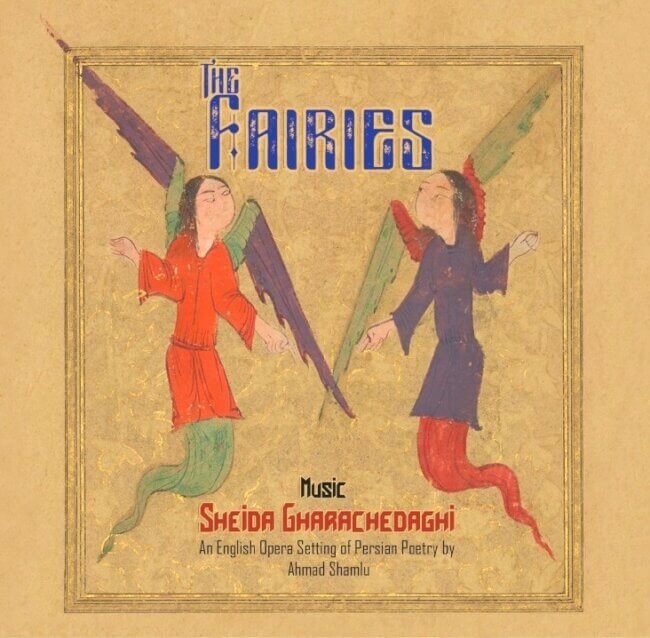 پریا [Pariya]. Definition: Opera-ballet composed in 1989 by Sheida Gharachedaghi (1941-).
The libretto is based on Ahmad Karimi-Hakkak’s English translation of the 1953/54 (1332) poem, Fairies پریا , by Ahmad Shamlu (1925-2000). The opera consists largely of a succession of lyrico-poetic episodes derived from Shamlu’s poem, with an additional text, ‘Freedom’, written by Karimi-Hakkak at the request of the composer to offer a more dramatic conclusion to the opera.
Shamlu’s poem is significant in bringing together literary as well as common and folk modes of language, including children’s nursery rhymes, in a work of complex political allegory. This highly influential poem remains one of Shamlu’s best-known and widely studied works. The poem depicts three Fairies who upon leaving the Fortress of Old Legends are now crying over the miseries of the real world in the City of Captive Slaves before them. The poem’s second voice, a horseman, approaches the Fairies and tries to find out the reason behind their sorrow. He tells them of an imminent uprising in the City and of the pains of the world. When he receives no response, he touches them, only to see them in turn metamorphose into various elements. Facing the horseman’s resistance, they give up and turn into wine, sea and mountain, all of which the horseman conquers to reach the City of Freed Slaves in the rays of sun.
Gharachedaghi’s opera incorporates the poem’s themes of slavery, uprising and freedom, while conveying its underlying ritualistic nature through episodes that point back towards Stravinsky’s Rite of Spring and Les Noces (most conspicuously in the rhythmic energy of the ‘Devil’s Dance’. Otherwise the opera is largely composed in an uncomplicated neo-tonal, neo-romantic style, with occasional faint allusions to Persian indigenous dastgah-based music (for instance at the opening).
The composer has explained that the main reason for choosing an English translation, rather than the original Persian, was to ensure the largest possible audience, given that the work had received its financial support in Canada. The Fairies was premiered on 17 November 1989 at the Metropolitan Convention Centre in Toronto with Monica Whicher (soprano), Robert Dirstein (tenor), Paul Coates (baritone), Thomas Rickerts (narrator), the Ensemble of Toronto and the Hisor Ensemble of Tadjikistan, under the direction of Owen Underhill. According to Gharachedaghi, the inclusion of the Hisor Ensemble was due to a miscommunication with the Soviet Embassy, who had been contacted to supply ballet dancers for the premiere. The Ensemble appears in the short ‘Celebrate’ movement, featuring ney and tombak and the narrator.
Following the opera’s completion, Gharachedaghi tried for over three decades to organise a performance of her work in Iran. However, due to the ongoing restrictions on the solo female voice, and because of the political nature of the poem, she was unsuccessful in receiving permission. In 2020, to coincide with the twentieth anniversary of Shamlu’s death, the Toronto performance was released on disc by the Persian Dutch Network and funded by the Iranian Women’s Study Foundation. The CD includes an incomplete libretto but excludes the performances by Keyhan Kalhor, which reportedly took place during the live premiere in 1989.
The recording has received mixed reviews. In her largely negative review for Avant-scène Opéra, Chantal Cazaux criticises the music’s simplistic tone and style, which she describes as having a greater allegiance to Hollywood than the source material. However, such criticism is arguably misplaced given Gharachedaghi’s previous experience in music for children, including founding and leading the Music Department of The Institute for the Intellectual Development of Children and Young Adults in 1971.
Sources
Ahmad Karimi-Hakkak, ‘A Well Amid the Waste: An Introduction to the Poetry of Ahmad Shamlu’, World Literature Today , 1977, Vol. 51, No. 2 , 201-06.